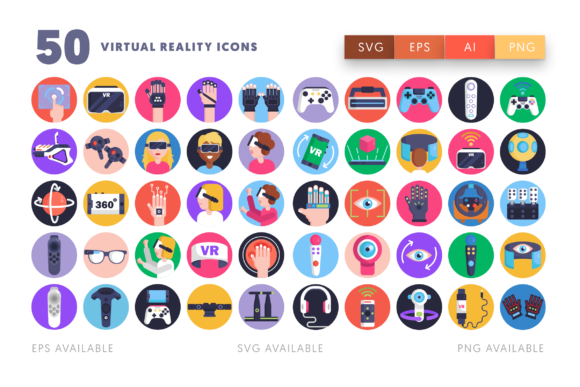
50 Virtual Reality Icons: A Practical Toolkit for Designers and Creators
Design projects often require consistent visual elements that communicate complex ideas quickly and clearly. The 50 Virtual Reality Icons set offers a streamlined solution for professionals working in tech, education, marketing, and creative industries. Whether you're building a website, designing an app interface, or preparing a presentation, this icon set provides the visual foundation needed to enhance your work with precision and professionalism.
How 50 Virtual Reality Icons Fits Into the Design Workflow
The 50 Virtual Reality Icons set is more than a collection of graphics—it's a design asset that integrates into multiple phases of a project. Before a project begins, these icons can help sketch out wireframes or mockups that convey the intended user experience. During the design process, they serve as reusable components that maintain consistency across platforms and screen sizes. After the main design is complete, they can be used to refine micro-interactions, navigation menus, or instructional overlays.
Because the set includes both general virtual reality symbols and specific 3D technology icons, it supports a wide range of use cases—from app development and UI design to educational materials and product documentation.
Preparation and Compatibility: Getting Started
One of the key strengths of the 50 Virtual Reality Icons set is its flexibility. It includes multiple file formats—AI, EPS, SVG, and PNG—ensuring compatibility with a variety of design tools. Adobe Illustrator users will appreciate the editable AI and EPS files, while Sketch and Inkscape users can work directly with SVG versions. PNG files are ideal for quick placement in presentations or web pages where vector editing isn't required.
Before integrating the icons into your project, it's helpful to organize them in a centralized folder or design system. This allows for faster access and easier version control, especially when working in team environments or across multiple platforms.
Using the Icons Across Different Platforms and Tools
Designers often work across multiple tools and platforms. The 50 Virtual Reality Icons are built to adapt seamlessly. SVG files scale without loss of quality, making them ideal for responsive web design. EPS files maintain integrity in print materials, while PNGs offer pixel-perfect results for digital banners, mobile apps, and social media assets.
- Web developers can embed SVG icons directly into HTML or CSS for scalable, interactive UI elements.
- Mobile app designers can use PNG versions for interface buttons and navigation controls.
- Presenters and educators can insert icons into slides or training materials to visually reinforce key points about VR technology.
Because each icon is provided in separate files, users can mix and match without unnecessary bloat. This modular approach supports faster iteration and cleaner asset management.
Customization and Consistency
The ability to customize icons is crucial for maintaining brand consistency. With the 50 Virtual Reality Icons set, you can easily adjust colors, text, and sizes to match your existing design system. Whether you're aligning with brand guidelines or adapting to a dark mode interface, these icons remain flexible without compromising quality.
For best results, consider creating a style guide that defines how each icon should be used in different contexts. This includes rules for spacing, alignment, and color variations. Maintaining consistency ensures that your design remains professional and intuitive across all touchpoints.
Integration Into Real-World Projects
Let’s look at how the 50 Virtual Reality Icons can be used in practical scenarios:
- UI/UX Design: Use the VR headset, game pad, and remote icons to build immersive app interfaces that guide users through virtual experiences.
- E-learning Platforms: Incorporate icons like the Wi-Fi signal or 3D goggles to visually explain technical requirements or navigation steps in VR-based training modules.
- Marketing Materials: Use the icons in promotional graphics to highlight features of VR products or services, making complex tech more approachable.
- Technical Documentation: Icons help simplify instructions. For example, a game pad icon can indicate controller-related steps in a setup guide.
These use cases demonstrate how the icon set bridges the gap between concept and execution, helping teams communicate more effectively and design with clarity.
Quality Control and Long-Term Use
When selecting design assets, longevity and maintainability are important considerations. The 50 Virtual Reality Icons are designed with clean lines, scalable vectors, and clear visual metaphors that remain relevant as technology evolves. Regularly auditing your icon usage and updating outdated visuals ensures your designs stay current and cohesive over time.
Additionally, maintaining a version-controlled asset library helps streamline updates. If a new VR device is introduced, for example, you can easily expand the icon set or modify existing visuals to reflect the change—without disrupting existing projects.
Maximizing Efficiency with Organized Asset Management
Efficient design workflows depend on well-organized resources. The 50 Virtual Reality Icons come in neatly separated files, allowing for easy integration into asset management systems. Whether you're using a tool like Figma, Adobe CC Libraries, or a custom folder structure, organizing icons by category (e.g., input devices, connectivity, hardware) speeds up retrieval and improves collaboration.
Consider tagging each icon with keywords like “VR headset,” “remote control,” or “3D interface” to make them searchable within your design platform. This small step can significantly reduce time spent searching for the right visual element during tight deadlines.
Conclusion: A Valuable Addition to Any Design Workflow
The 50 Virtual Reality Icons set is more than a design toolkit—it's a practical resource that supports clarity, consistency, and efficiency across multiple stages of a project. From initial planning to final delivery, these icons help designers communicate complex ideas visually, streamline workflows, and maintain brand alignment. Whether you're a UI designer, educator, marketer, or developer, integrating this icon set into your routine can enhance both the quality and efficiency of your work.